Talking to Your Partner About Hair Loss Treatment: A Practical Roadmap for Shared Decision-Making
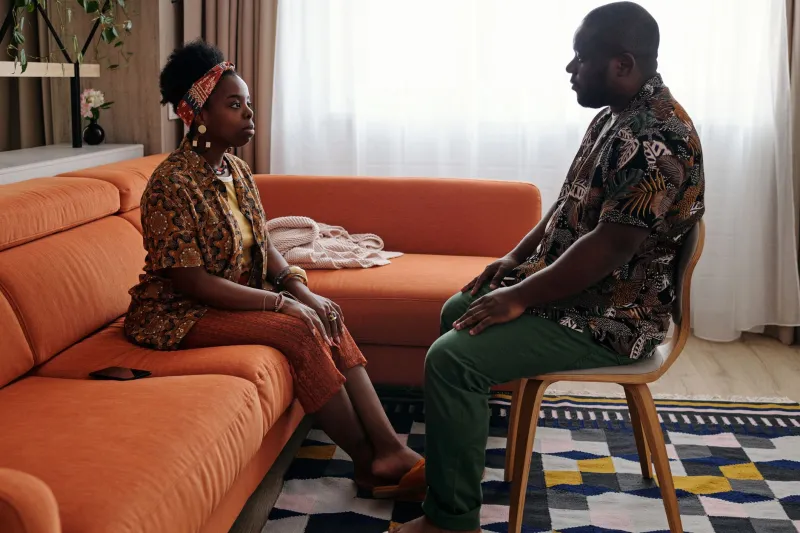
For many individuals experiencing hair loss, the hardest conversation is not the one with a dermatologist or pharmacist — it is the one that happens at home. Romantic partners occupy a unique position in any health journey: they witness the day-to-day reality of a condition, share financial resources that may fund treatment, and provide the emotional environment in which decisions are made. Yet the conversation about hair loss treatment is frequently avoided, abbreviated, or reduced to vague reassurances that miss the practical substance entirely.
This article is designed to move that conversation forward — past the initial disclosure and into the kind of structured, honest dialogue that supports good treatment outcomes and stronger relationships.
Why the Conversation Tends to Stall
Most people who bring up hair loss with a partner focus almost exclusively on how they feel about their appearance. That emotional layer is real and worth acknowledging. However, stopping there leaves a significant gap. Questions about which medications to pursue, how long results take, what the monthly cost looks like, and how treatment fits into a household budget all require deliberate discussion — and many couples never get there.
The reluctance is understandable. Hair loss carries cultural weight in the United States, particularly for men, where it is often framed as either a trivial vanity concern or an inevitable fact of aging that requires no intervention. Neither framing is accurate, and neither helps a person who has decided to pursue treatment feel supported in that decision.
The result is a common pattern: one partner researches treatment options privately, begins a regimen quietly, and manages the experience — including setbacks and costs — largely alone. This approach is not only isolating; it also removes a potential source of accountability and encouragement that could meaningfully improve adherence.
Choosing the Right Moment
Timing a conversation about hair loss treatment requires some intentionality. A rushed exchange before work or a comment made in passing during an unrelated discussion rarely produces the outcome either person hopes for. Instead, consider identifying a low-pressure moment — a weekend morning, a quiet evening at home — when both partners have mental bandwidth for a focused conversation.
It also helps to frame the conversation before it begins. Rather than opening with a statement that may feel like a confession, consider signaling that you want to discuss something health-related that you have been thinking through. This framing normalizes the topic and signals that you are approaching it with seriousness rather than embarrassment.
What to Actually Say: A Practical Script Framework
The following language is not intended to be memorized verbatim, but rather to illustrate how a productive conversation might be structured.
Opening the discussion:
"I've been doing some research on hair loss treatment, and I've decided I want to pursue it seriously. I wanted to talk through what that actually looks like — the options I'm considering, what it costs, and what to realistically expect — because it affects both of us."
This opening accomplishes several things at once. It establishes that a decision has been considered rather than impulsive, signals that the conversation is practical rather than purely emotional, and invites the partner into the process without making them feel blindsided.
Explaining the treatment landscape: Be prepared to explain, in plain terms, what treatment you are considering. If you are exploring prescription medications such as finasteride — one of the most clinically validated options for androgenetic alopecia — explain what the medication does, how it is taken, and what the evidence suggests about its effectiveness. Partners who understand the mechanism of a treatment are better positioned to offer meaningful support.
Addressing the timeline honestly:
"Most treatments take several months before visible results appear. There may be a period where I'm spending money on medication without obvious changes yet. I want us to be on the same page about that so it doesn't become a point of frustration."
This kind of preemptive transparency prevents the erosion of confidence that can occur when a partner — who was not fully informed at the outset — begins to question whether the treatment is working or worth continuing.
Discussing cost as a shared consideration: Prescription hair loss treatments represent a recurring monthly expense. Depending on insurance coverage and the pharmacy channel used, costs can vary considerably. Discreet online pharmacy services have made access to these medications more straightforward in recent years, but the financial commitment remains real. Framing this as a health expenditure — comparable to gym memberships, supplements, or other preventive care costs — can help situate it within a household budget conversation rather than treating it as frivolous spending.
Inviting Partnership Without Requiring It
Not every partner will want to be deeply involved in the mechanics of a hair loss treatment regimen, and that is entirely reasonable. The goal of this conversation is not to recruit a co-manager, but to establish transparency and reduce the isolation that often accompanies solo health decisions.
Consider asking your partner a direct question:
"Is there a way you'd like to be involved in this, or would you prefer I keep you updated periodically without going into detail each time?"
This question respects their preferences while keeping communication open. Some partners will want to track progress alongside you; others will simply want to know things are going well. Both responses are valid, and knowing which applies to your relationship helps you calibrate how much to share going forward.
Reframing Treatment as a Health Decision, Not a Vanity Choice
One of the more persistent obstacles to these conversations is the internalized belief — often reinforced by cultural messaging — that caring about hair loss is somehow superficial. This belief makes people reluctant to advocate for their own treatment, and it can make partners dismissive without intending to be unkind.
A useful reframe: hair loss treatment is a health decision in the same way that treating any other chronic or progressive condition is a health decision. Androgenetic alopecia is a medical condition with a physiological basis. Choosing to treat it with clinically supported medications is a reasonable, evidence-informed choice. Presenting it in these terms — rather than as a cosmetic preference — changes the tenor of the conversation.
What to Do When the Response Is Not What You Hoped For
Sometimes a partner responds to this conversation with skepticism, indifference, or even mild dismissal. If that happens, resist the impulse to either abandon the topic or escalate it into conflict. Instead, give them time to process and return to the conversation later with additional information if needed.
It is also worth separating two distinct issues: a partner's support for your decision to pursue treatment, and their personal opinion about hair loss as a physical characteristic. These are not the same thing, and conflating them can create unnecessary friction. A partner who says "I don't mind your hair loss" is not necessarily saying "I don't support your decision to treat it" — and distinguishing between those two positions can help clarify what you actually need from the conversation.
Moving Forward Together
The couples who navigate health decisions most effectively tend to share a common trait: they treat individual health concerns as legitimate topics for open, practical discussion. Hair loss is no exception. By approaching the conversation with structure, honesty, and a willingness to address both the emotional and logistical dimensions, individuals pursuing treatment create the conditions for genuine partnership — and for a regimen they are far more likely to maintain over time.
At PropeciaRx, we recognize that treatment decisions rarely happen in isolation. Access to discreet, clinically appropriate medications is one part of a larger picture that includes the relationships and support systems that sustain a person through a long-term health journey.