Generic Finasteride, Demystified: What FDA Bioequivalence Really Guarantees
Ask ten men whether generic finasteride "works the same" as Propecia and you'll get a range of answers, few of them grounded in how generic approval actually functions in the United States. The short version: the FDA doesn't take anyone's word for it. Here's what the rules require, what's genuinely different between products, and where cheap online pricing should raise an eyebrow.
The 80–90% Question: Why Generics Cost So Much Less
When Propecia's patent expired in 2013, generic manufacturers entered the market — and prices fell off a cliff. The reason isn't cheaper ingredients; it's the absence of research-and-development recovery and marketing costs. The original developer spent hundreds of millions bringing the molecule through clinical trials. Generic makers must prove their product matches an already-proven drug, a far less expensive process.
That savings gets passed to consumers. A month of generic finasteride typically costs a small fraction of the original brand price — often $10–$25 versus the $60–$70+ brand-name cost of years past.
Bioequivalence: The Standard Behind the Price Drop
Under FDA rules, a generic must demonstrate pharmaceutical equivalence and bioequivalence before approval. In practice, that means:
- Same active ingredient, in the same strength and dosage form
- Equivalent absorption: the generic's rate and extent of absorption must fall within a defined statistical range of the reference drug — generally 80–125% of the brand's measured bioavailability, with studies designed so the true difference is usually far smaller
- Same manufacturing quality standards, inspected under the same current Good Manufacturing Practice requirements
The practical consequence: once absorbed, a bioequivalent generic finasteride tablet lowers DHT the same way the brand does. Decades of generic finasteride use — it was first approved for enlarged prostate in the 1990s — support that equivalence in the real world.
What Is Actually Different: The Inactive Ingredients
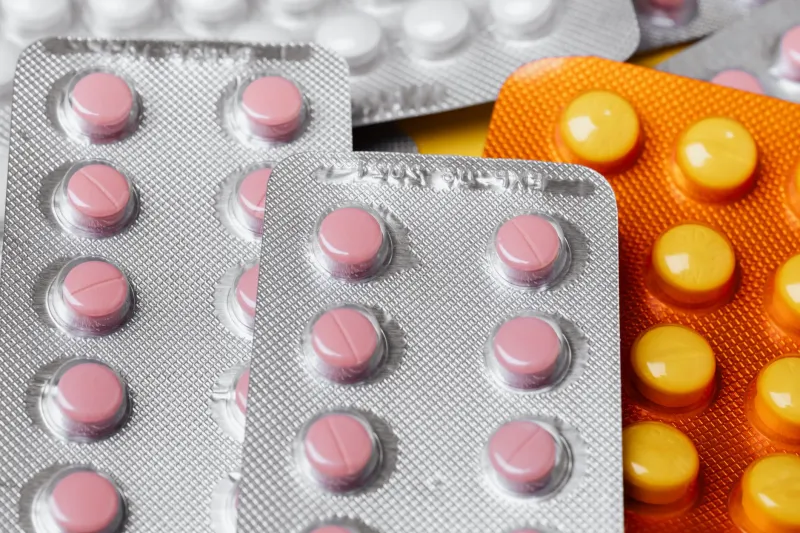
Here's where generic tablets legitimately diverge. Inactive ingredients — binders, fillers, coatings, colorants — can vary between manufacturers. Common examples in finasteride tablets include lactose monohydrate, microcrystalline cellulose, corn starch, and sodium starch glycolate, plus coloring agents.
For the overwhelming majority of users, these differences are clinically irrelevant. But they matter for a small subset:
- Lactose intolerance may be relevant for high-sensitivity individuals
- Dye allergies — some generics use colorants others don't
- Tolerability perceptions — some patients report subjective differences between brands, even when bioequivalence holds
If you notice a difference after switching manufacturers, it's reasonable to ask your pharmacist which company produced your tablets and whether an alternative is available.
When Cheap Is Too Cheap: Sourcing Red Flags
A low price from a licensed US pharmacy is the free market working. A suspiciously low price from an unverified website is usually counterfeit product. Warning signs include:
- Prices far below any US pharmacy's generic pricing
- No prescription requirement
- Foreign-language packaging or unverified international shipping
- No manufacturer name on the label
- Sites without NABP accreditation or verifiable US licensure
Counterfeit finasteride has been found with wrong doses, no active ingredient, or unlisted substances — a reminder that the generic-versus-brand question is only meaningful when the product is genuine.
The Bottom Line
"Generic" does not mean "compromised." It means the expensive part — proving the molecule works — was already done, and the FDA has verified that the copy performs within rigorous statistical bounds of the original. For the vast majority of men, generic finasteride delivers the same clinical outcome at a dramatically lower cost, making long-term treatment dramatically more sustainable. The only real risk isn't the generic — it's buying one from a source that shouldn't be selling medication at all.