Beyond the Basics: Emerging Hair Loss Treatments Reshaping What's Possible in 2024
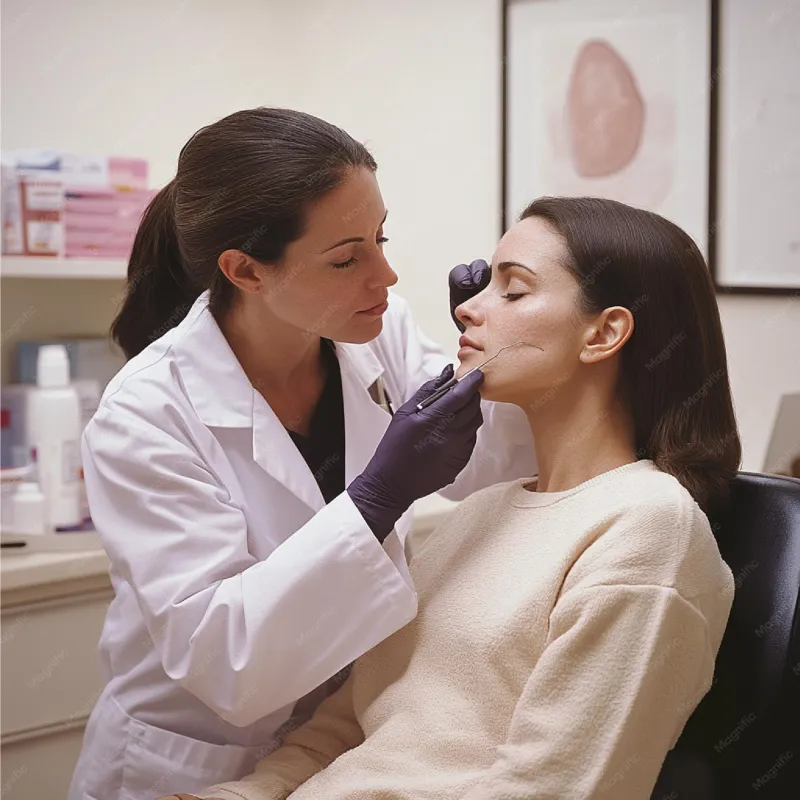
Photo: dermatologist reviewing hair loss treatment options with patient in modern clinic, via img.freepik.com
For decades, the conversation about prescription hair loss treatment in the United States began and ended with two names: finasteride and minoxidil. Both remain highly effective, well-studied, and widely prescribed — and they continue to form the backbone of evidence-based treatment protocols for androgenetic alopecia. But the field is no longer standing still.
2024 has brought a notable surge of clinical activity, regulatory movement, and genuine therapeutic innovation that is beginning to reach American patients in meaningful ways. For those who have been monitoring developments in hair restoration medicine — or for anyone who has wondered whether better options might be on the horizon — this is a particularly important moment to pay attention.
Why the Treatment Landscape Is Shifting Now
Several forces are converging to accelerate progress in this space. First, the science of hair follicle biology has matured considerably over the past decade, giving researchers more precise molecular targets to work with. Second, the commercial opportunity is enormous: the global hair loss treatment market is projected to exceed $12 billion by 2026, drawing substantial investment from pharmaceutical companies and biotech startups alike. Third, the success of JAK inhibitor therapies in treating alopecia areata — a distinct but related condition — has opened new conceptual doors for androgenetic alopecia research.
The result is a pipeline of emerging treatments that ranges from refined versions of existing compounds to genuinely novel mechanisms of action.
JAK Inhibitors: A New Class With Growing Relevance
Perhaps no development in hair loss medicine has generated more attention in recent years than the FDA approval of oral baricitinib (Olumiant) and ritlecitinib (Litfulo) for severe alopecia areata. These Janus kinase inhibitors work by interrupting the immune signaling pathways that cause the immune system to attack hair follicles — a fundamentally different mechanism from the hormonal and circulatory approaches of finasteride and minoxidil.
While JAK inhibitors are not currently approved for androgenetic alopecia, their clinical success has prompted active investigation into whether similar pathways play a role in the more common pattern hair loss. Several trials are underway, and dermatologists are watching the data closely. For patients whose hair loss has an inflammatory or immune component — which emerging research suggests may be more prevalent than previously understood — this class of drugs could eventually represent a meaningful option.
It is worth noting that JAK inhibitors carry a more significant side effect profile than finasteride, and any future application to androgenetic alopecia would require careful benefit-risk assessment. Patients should not attempt to access these medications off-label without thorough medical supervision.
Low-Level Laser Therapy: From Fringe to Mainstream
Low-level laser therapy (LLLT), sometimes marketed under the term photobiomodulation, has moved from a skeptic's footnote to a credible adjunct therapy in a relatively short period. Several FDA-cleared devices — including laser caps and combs designed for home use — have accumulated enough clinical evidence to earn a place in combination treatment protocols recommended by board-certified dermatologists.
LLLT is thought to work by stimulating cellular activity within hair follicles through specific wavelengths of light, improving follicular metabolism and extending the growth phase of the hair cycle. It is not a standalone solution for significant androgenetic alopecia, but as a complement to pharmaceutical therapy, the evidence for modest improvement in density and shedding reduction is increasingly persuasive.
For patients seeking to maximize their regimen without adding another prescription medication, LLLT devices represent a practical and relatively low-risk option worth discussing with a treating physician.
Topical Finasteride: Targeted Delivery, Reduced Systemic Exposure
One of the more significant recent developments for patients who have been cautious about oral finasteride due to concerns about systemic side effects is the increasing availability of topical finasteride formulations. Compounded topical finasteride — typically combined with minoxidil in a single solution — has been gaining traction in US dermatology practices, and clinical data suggest it can deliver meaningful scalp-level DHT suppression with substantially lower systemic absorption than the oral tablet.
A 2021 study published in the Journal of the American Academy of Dermatology demonstrated that topical finasteride at a concentration of 0.25% produced scalp DHT reductions comparable to the oral 1mg dose while achieving serum finasteride levels roughly 75 percent lower. For patients who have avoided oral finasteride due to concerns about sexual side effects — which, while uncommon, are a documented consideration — the topical route may offer a compelling middle ground.
It is important to clarify that topical finasteride is currently available primarily through compounding pharmacies in the United States and is not yet FDA-approved as a standalone product in this form. Patients interested in this option should pursue it through a licensed healthcare provider.
Dutasteride: The Stronger Alternative Already in Clinical Use
Dutasteride, which inhibits both type I and type II 5-alpha reductase enzymes compared to finasteride's selective type II inhibition, has been used off-label for androgenetic alopecia in the United States for a number of years. It is FDA-approved for benign prostatic hyperplasia under the brand name Avodart, and its more comprehensive DHT suppression — reducing serum DHT by approximately 90 percent compared to finasteride's 70 percent — makes it an attractive option for patients who have not achieved satisfactory results with finasteride.
While dutasteride is not FDA-approved specifically for hair loss in the US (it holds that approval in South Korea and Japan), it is a legitimate off-label option that many dermatologists prescribe for appropriate patients. Its longer half-life and stronger efficacy profile come with a corresponding need for careful medical oversight.
Platelet-Rich Plasma (PRP): Evidence Accumulating
Platelet-rich plasma therapy, in which a patient's own blood is processed to concentrate growth factors and then injected into the scalp, has been practiced in hair restoration clinics for over a decade. The evidence base has historically been considered preliminary, but a growing number of well-designed trials are strengthening the case for PRP as a meaningful adjunct to pharmaceutical treatment — particularly for patients in the earlier stages of hair loss.
PRP is not a pharmaceutical intervention and falls outside the scope of prescription therapy, but it represents the kind of combination approach that modern hair loss medicine increasingly favors: addressing the condition through multiple complementary pathways rather than relying on a single mechanism.
What This Means for Patients Today
The practical implication of all this activity is that patients in 2024 are no longer limited to a binary choice between two medications. A thoughtful, individualized treatment protocol might now include:
- An oral or topical DHT inhibitor (finasteride or dutasteride)
- A vasodilatory agent such as minoxidil (oral or topical)
- An adjunct modality such as LLLT or PRP
- Emerging options pursued through clinical trials or under specialist supervision
The key word is individualized. The expanding landscape of options makes the guidance of a knowledgeable healthcare provider more important, not less. Self-directed treatment decisions in this environment carry real risks, including missed diagnoses, drug interactions, and suboptimal sequencing of therapies.
Staying Informed Through a Trusted Source
At PropeciaRx, our commitment is to keep patients informed about both the established and the emerging without overstating the evidence or minimizing the importance of professional medical guidance. The treatments covered here represent the current frontier — some proven, some promising, all worth understanding.
If you are exploring your options beyond the standard first-line therapies, our platform provides discreet access to physician-reviewed consultations and prescription treatments tailored to your individual profile. The landscape is expanding. Your options are growing. And knowing what is available is the first step toward making the right decision for your health.